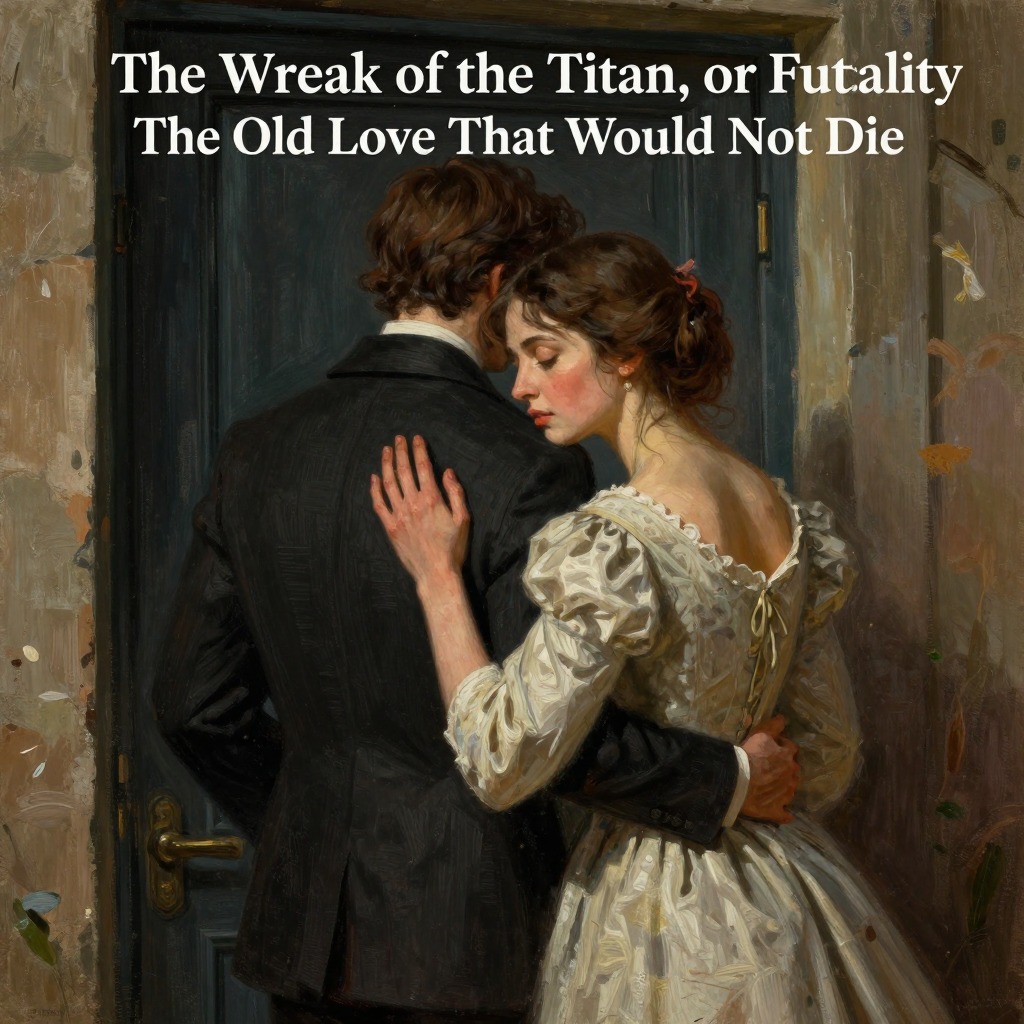
Romantic relationship between John Rowland and Myra Selfridge
The romantic relationship between John Rowland and Myra Selfridge (née Gaunt) is the emotional engine of Morgan Robertson's novella, a story of unrequited love, social disgrace, and eventual redemption. Their past affair, broken by Myra's rejection of Rowland's atheism and his drinking, haunts both characters and drives the plot, culminating in Rowland's heroic rescue of Myra's daughter and his final, selfless act of renunciation.
Identity and Background
John Rowland, a graduate of the United States Naval Academy, was once a gentleman and a frequent guest at the home of Myra's father, Mr. Gaunt. He asked for Myra's hand in marriage, but his request was not granted. Myra, a professing Christian, was initially attracted to Rowland but turned against him when she discovered he was an atheist, a man who "actually denied the existence of God." She also smelled liquor on his breath, which, combined with his tobacco smell, led her to give him up. Rowland, in a passionate outburst, accused her of leading him on and playing with him, and spoke of an "immutable law of chance" and a "governing balance of events," predicting that "for all the suffering we inflict on others, we receive an equal amount ourselves." This confrontation ended their relationship and sent Rowland into a downward spiral of alcoholism and disgrace, culminating in his being broken from the navy for conduct unbecoming an officer after getting roaring drunk at the President's levee.
Arc Through the Plot
Five years later, Rowland, now a common sailor on the Titan, encounters Myra, who is now married to George Selfridge and traveling with their young daughter, also named Myra. The meeting is devastating for both. Rowland, recognizing her, is overwhelmed by a "dying flutter of a starved love," and Myra, equally affected, is terrified, remembering his violent temper and his hinted revenge. She fears he might steal their child. Rowland's unrequited love torments him, and he muses on the injustice of his fate, questioning why the loss of one woman's affections can outweigh every blessing in life. During his drugged state on the bridge, he hallucinates a vision of Myra calling him back, and his love for her is so strong that even in his delirium, he cries out her name.
Relationships and Conflict
The relationship is defined by conflict and misunderstanding. Myra, believing Rowland to be a dangerous and degraded man, accuses him of attempting to murder her child when she sees him holding the little girl over the rail in jest. She and her husband, George, complain to the captain, and Myra agrees to testify against Rowland in English courts for attempted murder. Rowland, however, is not the man she fears. When the Titan sinks, he finds himself on an iceberg with little Myra, whom he has rescued. He risks his life to save her, fighting and killing a polar bear with only a knife, an act that costs him his arm. Throughout his ordeal, his thoughts are consumed by the mother, and he prays for her safety, even though he is an atheist. His love for Myra is so profound that he is willing to sacrifice everything for her child.
Change and Ending
Rowland's love for Myra transforms him. From a broken, alcoholic sailor, he becomes a selfless hero. After the rescue, he refuses to testify against the Titan's officers, not out of spite, but to protect the child's inheritance, knowing that the insurance money would be lost if he exposed the company's negligence. He gives up drinking, declaring, "I've a future now, as well as a past." He returns to New York, penniless, and is arrested for kidnapping, but is discharged when the magistrate learns the truth. He then rebuilds his life, eventually securing a government position. Yet, his love for Myra remains. When she writes to him, saying that Myra asks for him continually and that she can bear it no longer, he goes to see her. The story ends with this ambiguous reunion, suggesting that their relationship may be rekindled, but leaving the outcome uncertain.
Thematic Significance
The relationship between Rowland and Myra embodies the novella's central themes of love, sacrifice, and redemption. Rowland's unrequited love is the catalyst for his downfall, but it also becomes the source of his redemption. His selfless acts, driven by love, elevate him from a state of degradation to one of moral heroism. The relationship also highlights the contrast between Myra's conventional Christianity and Rowland's honest atheism, and his final prayer, made for her sake, suggests a reconciliation of sorts, not with God, but with his own humanity. The story ultimately suggests that love, even when unrequited, can be a powerful force for good, and that true redemption lies in selfless devotion to others.